
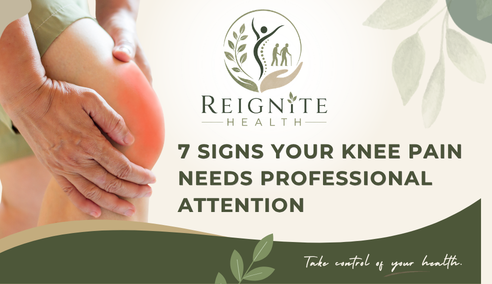
Knee pain is common. It can happen after an injury, develop gradually with age, or appear when you suddenly increase your activity.
Sometimes knee pain settles with time and appropriate activity modification. But persistent or worsening knee pain should not simply be ignored.
Your knee is involved in many everyday movements, including walking, climbing stairs, standing up and getting in and out of a chair. When pain begins affecting these activities, it may be time to find out what is causing it.
At Reignite Health in Fourways, Bokamoso Mthimkulu Biokineticist uses prescribed exercise and rehabilitation to help people manage musculoskeletal conditions, improve movement and build physical capacity.
Here are 7 signs that your knee pain deserves professional attention.
1. Your Knee Pain Isn’t Going Away
One of the biggest signs that you should seek professional guidance is persistent knee pain. If your knee continues to hurt despite reducing the activity that initially aggravated it, there may be an underlying issue that needs to be assessed.
Persistent pain doesn’t necessarily mean that something serious is wrong. However, understanding what is contributing to the pain can help determine the most appropriate approach.
A professional assessment can look at factors such as:
- Strength
- Mobility
- Movement patterns
- Joint function
- Activity levels
- Previous injuries
- Your symptoms and their triggers
2. Your Knee Pain Is Getting Worse
Pain that is gradually becoming more frequent or more intense shouldn’t simply be accepted as “getting older.” You may notice that activities that previously didn’t bother you are becoming uncomfortable.
For example:
- Walking becomes painful
- Stairs become difficult
- Standing for longer periods causes discomfort
- You struggle to exercise
- Getting out of a chair hurts
A gradual increase in symptoms is a good reason to have your knee assessed.
3. Your Knee Is Swollen
Swelling can occur for many different reasons. It may happen following an injury, irritation of the joint or other conditions affecting the knee.
If your knee becomes significantly swollen, repeatedly swells after activity or remains swollen, professional assessment is appropriate. Sudden, severe swelling following an injury should be assessed promptly.
4. Your Knee Feels Unstable or Gives Way
Does your knee ever feel like it might buckle underneath you? Do you find yourself grabbing onto something because you don’t trust your knee to support you?
A feeling of instability can occur for several reasons, including problems involving the muscles, joint, or structures within the knee.
Weaknesses around the knee and hip can also affect how the leg is controlled during movement. A Biokineticist can assess your strength, balance and functional movement and determine whether exercise rehabilitation may be appropriate.
5. You Can’t Fully Bend or Straighten Your Knee
Changes in your knee’s range of movement can affect everyday activities. You may notice difficulty with:
- Squatting
- Getting into a chair
- Climbing stairs
- Getting in and out of a car
- Kneeling
- Walking normally
A loss of movement can sometimes occur because of pain, swelling, stiffness or an underlying joint problem. Rather than repeatedly forcing the knee through painful movements, it is better to understand why your movement has changed.
6. Your Knee Pain Is Affecting Your Daily Life
You don’t have to wait until your knee pain becomes severe before seeking help. If pain is changing what you do every day, it’s worth paying attention to.
For example, perhaps you have started:
- Avoiding stairs
- Walking less
- Giving up exercise
- Avoiding social activities
- Struggling at work
- Avoiding hobbies
- Relying more on other people
Pain that changes your behaviour can gradually lead to reduced strength and fitness. This can create a cycle:
Pain → less movement → reduced strength → reduced physical capacity → more difficulty moving.
Appropriate rehabilitation can help break this cycle.
7. Your Knee Pain Started After an Injury
Knee injuries can range from relatively minor strains to more significant injuries involving your ligaments, cartilage or other structures.
If your knee pain started after:
- A fall
- A sporting injury
- A twist
- A collision
- A sudden change in direction
- A lifting incident
It may be worth having it assessed, particularly if symptoms persist.
You should seek prompt medical attention if you have severe pain, significant swelling, an obvious deformity, cannot bear weight, or cannot move the knee normally after an injury.
What Can Cause Knee Pain?
Knee pain can have many different causes.
These can include:
- Osteoarthritis
- Previous injuries
- Muscle weakness
- Tendon problems
- Ligament injuries
- Meniscus injuries
- Overuse
- Changes in activity levels
- Reduced mobility
- Poor load management
Not every case of knee pain has the same cause, which is why individual assessment matters.
Can Biokinetics Help with Knee Pain?
Yes, Biokinetics can form part of the rehabilitation and management of many knee conditions. A Biokineticist may look at the entire movement system around the knee, including the hips, legs, feet and trunk.
Your programme may include:
- Strength training
Strengthening the muscles around the hips and legs can improve your ability to perform everyday activities.
- Mobility exercises
Where appropriate, improving mobility can help you move more comfortably and efficiently.
- Functional exercises
Exercises can be designed around movements you need in everyday life, such as walking, climbing stairs and standing from a chair.
- Balance and movement control
Improving control of the leg during movement can be an important part of rehabilitation for some people.
- Gradual return to activity
If pain has caused you to stop exercising, your programme can help you gradually rebuild your physical capacity.
What If You Have Knee Arthritis?
Osteoarthritis is one of the common causes of persistent knee pain, particularly as we get older. Having arthritis does not automatically mean that you should stop using your knee.
In many cases, appropriately prescribed exercise can form an important part of managing osteoarthritis.
A programme may focus on:
- Strength
- Mobility
- Cardiovascular fitness
- Functional capacity
- Weight management where appropriate
- Confidence with movement
Exercise should be adapted to the individual’s symptoms and abilities.
You Don’t Have to Wait Until Your Knee Gets Worse
One of the biggest mistakes people make with joint pain is waiting until it significantly limits their life before doing anything about it.
If your knee pain is beginning to change how you move, exercise or participate in everyday activities, that’s already useful information. Early assessment can help you understand what may be contributing to your symptoms and whether exercise rehabilitation is appropriate.
When Is Knee Pain an Emergency?
While many knee problems can be assessed routinely, some symptoms require more urgent medical attention.
Seek prompt medical care if you experience:
- Severe pain following significant trauma
- An obvious deformity
- Inability to bear weight after an injury
- Sudden major swelling
- A hot, red knee accompanied by fever
- Severe pain with unexplained swelling
- New significant weakness or loss of sensation
If you are unsure about the cause of your knee pain, medical assessment should come first.
Take Your Knee Pain Seriously
Knee pain doesn’t always mean that something is seriously wrong, but persistent symptoms shouldn’t automatically be dismissed as part of ageing.
The earlier you understand what contributes to your pain, the sooner you can make informed decisions about movement and rehabilitation.
At Reignite Health in Fourways, Bokamoso Mthimkulu Biokineticist provides individualised exercise rehabilitation for people experiencing knee pain, arthritis, reduced strength and other musculoskeletal conditions.
Don’t wait for your knee pain to take away your independence. Start working on your movement and strength today.
Wishing you a lovely week ahead. Chat soon.
Bokz the Bio
Everybody has the ability to take control of their own health
Facebook: Reignite Health
LinkedIn: Reignite Health
Website: reignitehealth.co.za
WhatsApp: +27 83 562 9201
Email: bmbio@reignitehealth.co.za