
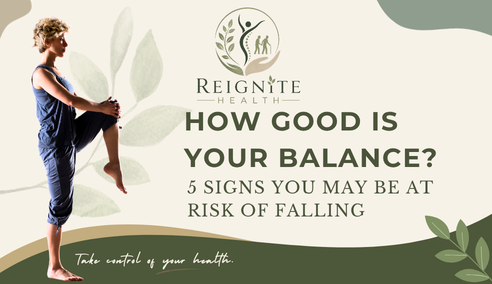
Falls are one of the leading causes of injury and loss of independence, particularly among older adults and individuals living with neurological or chronic health conditions. The encouraging news is that many falls are preventable. By recognizing the early warning signs and improving your balance through targeted exercise, you can significantly reduce your risk of falling.
At Reignite Health, Bokamoso Mthimkulu Biokineticist helps individuals improve their balance, strength, and confidence through personalized exercise rehabilitation.
Why Is Balance So Important?
Balance is your body’s ability to remain stable while standing, walking, turning, or reaching. Good balance depends on several body systems working together, including:
- Your muscles
- Your joints
- Your vision
- Your inner ear (vestibular system)
- Your nervous system
- Your brain
When one or more of these systems are affected, your balance may decline, increasing your risk of falls.
Good balance allows you to:
- Walk confidently
- Climb stairs safely
- Get up from a chair with ease
- Exercise safely
- Remain independent
- Prevent injuries
Who Is at Greater Risk of Falling?
Anyone can experience balance problems, but your risk may be higher if you:
- Are over the age of 65
- Have Parkinson’s disease
- Have Multiple Sclerosis
- Have had a stroke
- Live with arthritis
- Have diabetes and neuropathy
- Experience dizziness or vertigo
- Have osteoporosis
- Have poor vision
- Have muscle weakness
- Take medications that affect balance
- Have fallen before
Having one or more of these risk factors doesn’t mean a fall is inevitable, but it does mean balance should be assessed.
5 Signs You May Be at Risk of Falling
1. You Feel Unsteady When Walking
Do you find yourself slowing down, walking carefully, or feeling as though you might lose your balance?
Feeling unsteady is often one of the earliest signs that your balance system needs attention.
You may notice that you are:
- Walking more cautiously
- Looking down while walking
- Feeling unstable on uneven ground
- Needing support when walking outdoors
These changes shouldn’t be ignored.
2. You Hold Onto Furniture or Walls
If you regularly use walls, kitchen counters, or furniture for support while walking around your home, your balance may not be as good as it should be.
This behaviour often develops gradually and can become so normal that many people don’t realize they’re relying on support.
3. You’ve Had a Fall or Near Fall
One of the strongest predictors of a future fall is having already experienced one.
Even if you weren’t injured, a fall or “near miss” may indicate:
- Poor balance
- Muscle weakness
- Reduced reaction time
- Mobility limitations
Early intervention can help prevent future falls.
4. You Struggle to Stand on One Leg for more than 15 seconds
Standing on one leg is a simple indicator of balance, lower-limb strength, and core stability.
If you cannot comfortably stand on one leg for 15 seconds without holding onto something, it may be a sign that your balance needs improvement.
Please note: Do not try this test if you feel unsafe or are at risk of falling. If you do attempt it, make sure you are near a sturdy support or have someone with you.
5. You Avoid Activities Because You’re Afraid of Falling
Fear of falling is common, especially after a previous fall.
Unfortunately, avoiding movement often leads to:
- Reduced strength
- Poor balance
- Less confidence
- Lower fitness
- Greater fall risk
The right exercise programme can help rebuild confidence while improving physical function.
What Causes Poor Balance?
Balance problems can develop for many reasons, including:
- Muscle weakness
- Reduced flexibility
- Poor posture
- Joint pain
- Neurological conditions
- Vestibular disorders
- Reduced physical activity
- Age-related changes
- Certain medications
The first step is identifying which factors are contributing to your balance difficulties.
How Can Biokinetics Help?
Biokinetics is a healthcare profession that uses scientifically based exercise therapy to improve movement, reduce injury risk, and enhance quality of life.
At Reignite Health, Bokamoso Mthimkulu Biokineticist performs a comprehensive balance assessment before designing a personalized exercise programme based on your individual needs.
5 Ways Biokinetics Improves Balance and Reduces Fall Risk
1. Improves Leg Strength
Strong leg muscles are essential for maintaining balance.
Exercises target key muscle groups, including:
- Quadriceps
- Hamstrings
- Gluteal muscles
- Calves
- Core muscles
Greater strength helps you react more effectively if you lose your balance.
2. Improves Balance and Coordination
Specific balance exercises retrain your body’s ability to stay stable during movement.
These may include:
- Single-leg balance exercises
- Walking drills
- Dynamic balance activities
- Functional movement training
As balance improves, confidence often improves too.
3. Improves Mobility and Flexibility
Stiff joints and tight muscles can affect balance.
Mobility exercises help improve:
- Hip movement
- Ankle mobility
- Spinal mobility
- Walking mechanics
Better mobility allows you to move more freely and safely.
4. Improves Confidence in Everyday Movement
Many people become anxious after a fall.
A structured rehabilitation programme gradually exposes you to safe movement, helping rebuild confidence while reducing fear.
Improved confidence often leads to greater independence and increased participation in daily activities.
5. Reduces Your Overall Risk of Falls
Biokinetics doesn’t just improve balance, it addresses many of the factors that contribute to falls.
Your programme may include:
- Strength training
- Balance exercises
- Functional movement practice
- Walking retraining
- Fall prevention education
The result is a more resilient body that is better prepared for everyday challenges.
Simple Tips to Improve Your Balance
Alongside your exercise programme, you can reduce your risk of falling by:
- Staying physically active.
- Wearing supportive, well-fitting shoes.
- Removing loose rugs and clutter at home.
- Improving lighting in hallways and staircases.
- Having your vision checked regularly.
- Managing long-term health conditions with your healthcare team.
- Using assistive devices if recommended.
- Completing a professional balance assessment if you notice changes.
Why Choose a Biokineticist?
If you’re searching for a Biokineticist in Fourways to help improve your balance or reduce your risk of falling, Reignite Health offers evidence-based exercise rehabilitation tailored to your needs.
Bokamoso Mthimkulu Biokineticist works with older adults and individuals living with neurological, orthopaedic, and chronic medical conditions to:
- Improve balance
- Increase strength
- Enhance mobility
- Reduce fall risk
- Improve confidence
- Maintain independence
Every programme is personalized to your current ability, health status, and goals.
When Should You Have Your Balance Assessed?
You should consider a professional balance assessment if you:
- Have fallen in the past year.
- Feel unsteady when walking.
- Have difficulty climbing stairs.
- Need support to stand from a chair.
- Experience dizziness.
- Have a neurological condition such as Parkinson’s disease or Multiple Sclerosis.
- Have diabetes with numbness in your feet.
- Avoid activities because you’re afraid of falling.
Early intervention can help prevent injuries and preserve independence.
Final Thoughts
Good balance is something many people take for granted until it begins to change.
The good news is that balance can often be improved with the right assessment and exercise programme. Whether you’re recovering from an injury, living with a chronic condition, or simply want to stay active as you age, Biokinetics can help you move with greater confidence and reduce your risk of falls.
If you’re looking for a Biokineticist in Fourways, Reignite Health is here to help.
Bokamoso Mthimkulu Biokineticist is committed to helping people improve their balance, maintain their independence, and enjoy a healthier, more active life through personalized exercise rehabilitation.
Wishing you a lovely week ahead. Chat soon.
Bokz the Bio
Everybody has the ability to take control of their own health
Facebook: Reignite Health
LinkedIn: Reignite Health
Website: reignitehealth.co.za
WhatsApp: +27 83 562 9201
Email: bmbio@reignitehealth.co.za